
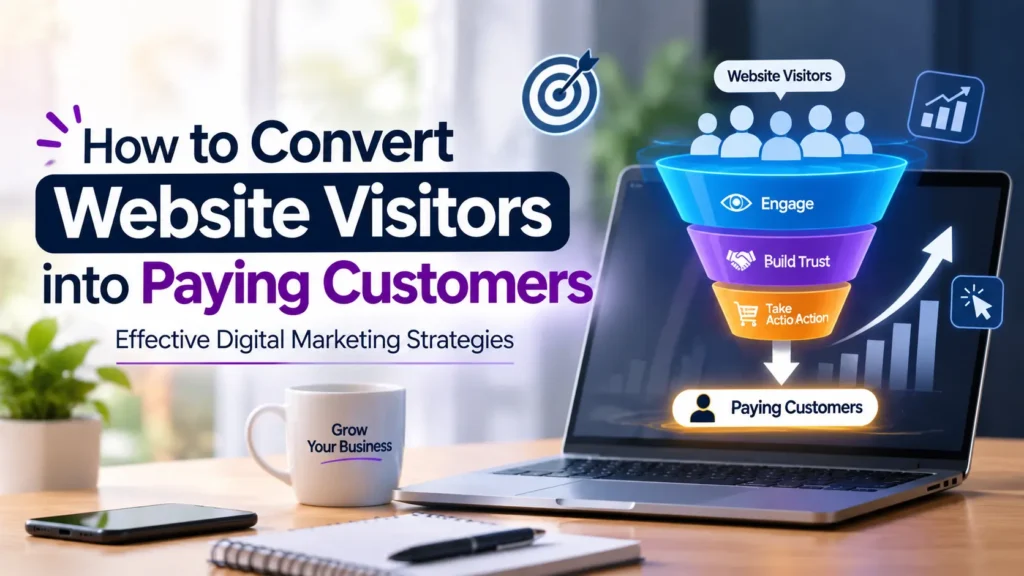
How to convert website visitors into paying customers
How to Convert Website Visitors into Paying Customers Most small businesses in India spend time and money getting people to visit their website. Traffic from search, social media, and referrals can look healthy on a dashboard, yet sales stay flat. The problem is rarely the number of visitors. It is what happens after they arrive.Converting a visitor into a paying customer is a process of building trust, answering doubts, and making the next step easy. The good news is that the steps are practical and within reach of any business owner willing to test and improve. Know who the visitor is A website that tries to speak to everyone usually convinces no one. Before you change any design or write any copy, be clear about who you are trying to reach. A homemade pickle seller in Kochi, a tuition academy in Pune, and a software company in Bengaluru each need very different pages. Look at your current customers and ask them why they chose you, what nearly stopped them, and what they compared you against. Their answers are your best guide to the words and proof your website should use. Make the first five seconds count Visitors decide within seconds whether a page is worth their time. Your headline should say what you offer, who it is for, and the main benefit, in plain language. Vague claims like “innovative solutions for your growth” tell the visitor nothing. Something like “Affordable online bookkeeping for small shops in Tamil Nadu” tells them they are in the right place. Pair the headline with a clear visual, a short supporting line, and one main button. If a first-time visitor cannot tell what to do next within a few seconds, the page is working against you. Remove the friction Every extra click, form field, and unclear instruction is a chance for the visitor to leave. Check your site on a mobile phone, since a large share of Indian internet users browse only on mobile. Test whether pages load quickly on an average mobile connection, because slow pages lose patience before they lose interest. Keep forms short and ask only for what you need to respond. If you collect payment, offer the options people actually use, such as UPI, cards, and net banking, and make sure checkout works smoothly on a small screen. Build trust before you ask for moneyBuild trust before you ask for money People rarely buy from a stranger on the first visit. They need reassurance. Genuine customer reviews with names and locations, shown with the customer’s permission, go a long way. So do clear contact details, including a phone number and a physical address if you have one, and refund and delivery policies written in simple language. Photos of your real team, premises, or products work better than generic stock images, and any certifications or memberships you actually hold add credibility. Avoid fake urgency such as countdown timers that reset on refresh. Visitors notice, and it damages trust for good. Answer the doubts on the page Think about the questions a customer asks before buying. Is the price fair? Will the product fit my needs? What happens if it does not work? How long will delivery take? Can I talk to a real person? Answer these openly on the page, ideally in a short FAQ near the buy button. Each doubt you resolve removes one reason to leave. Many businesses find that honest answers about pricing and delivery improve conversions more than any design change. Give one clear call to action A page that offers five different actions usually produces none. Choose one main goal for each page, whether that is buying a product, booking a demo, requesting a quote, or joining a waitlist. Use the same button label throughout and make it visible without scrolling far. Secondary actions are fine, but they should be quieter. A visitor who is not ready to buy may still want a free guide or a newsletter, and capturing their contact details gives you a chance to follow up later. Follow up with the people who did not buy Most visitors will not buy on their first visit, and that is normal. Collect email addresses through a useful offer such as a checklist, a sample, or a short course. Then send helpful messages over the following weeks. Share a tip, a customer story, or an answer to a common question. Keep the messages useful rather than pushy. When the customer is finally ready, they will remember who helped them. Measure and improve You cannot improve what you do not measure. A free analytics tool will show where visitors come from, which pages they view, and where they leave. Track how many people reach your key action, not just the total number of visits. Change one thing at a time, such as the headline, the button text, or the order of sections, and let each change run long enough to show a clear result. Small improvements added together can meaningfully grow your sales over a year. Where to begin If you are unsure where to start, spend the next month rewriting your headline so it names your audience and main benefit, then add three genuine customer reviews near your main button. Shorten your contact or order form to the essential fields and write clear answers to the five questions customers ask most. Finally, set up a simple email follow-up for visitors who do not buy. Converting visitors is not a single trick. It is a steady habit of making your website clear, honest, and easy to act on, and businesses that do this well turn ordinary traffic into loyal, paying customers.